About
Early-stage companies often need a product function long before they're ready to build one. The strategy is unclear, the gap between engineering and the business is widening, and the foundations that would let a team scale don't exist yet. That's the gap I fill.
What makes me different from most product leaders is where I came from. I started as a software engineer — and the work I kept gravitating toward was building tools for other developers. That's not a background detail; it's the lens through which I do everything. I understand how engineers think, what makes a technical constraint real versus negotiable, and how to build a product organization that engineering actually wants to partner with rather than work around.
That positioning has proven out across my career. At Palantir, I was invited into the company's inaugural product management cohort after leading their internal developer tools team as an engineer — one of the first PMs in a company that had never had the function before. At Sourcegraph, I joined as the first non-engineering hire and built a 30+ person product organization from scratch, helping the company reach $25M in revenue, a unicorn valuation, and four of five FAANG companies as customers. In each case, the work was the same: come in early, build what's missing, and create the conditions for everything that comes after.
Today I work as an independent consultant and fractional product leader, and serve on the advisory board for the Cal Poly Noyce School of Applied Computing. If any of this resonates, I'd love to connect.
- BS Animal Science, MS Computer Science
- MS Research: Autonomously tracked sharks with an AUV at Cal Poly
- Part of Palantir's first product manager cohort
- Spent four years building software for horses, professionally
- Top 5 finalist, Most Admired Product Leader — Amplitude's Product 50 (2022)
What I believe
The best teams are trusted to own their work. My job is to create the conditions for that—clarity of direction, removal of blockers, and a culture where people feel safe to make decisions.
I spent years as a developer. I know what it's like to inherit a spec that ignores technical reality. I stay in my lane, but I collaborate deeply—on roadmap priorities, on managing tech debt, on building plans that are actually feasible.
High-performing to me means consistent, valuable delivery by a team that knows what it's working toward. I'd rather have a small team with sharp focus than a large one running in circles.
I work best with people who care—about craft, about customers, about doing things right even when it's harder.
I learned early in my career what it felt like to be trusted, empowered, and genuinely appreciated. I've spent my career trying to create that environment for others.
Personal
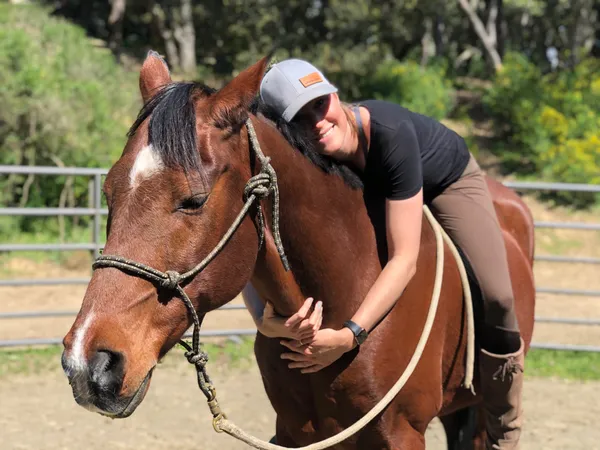
My passion for horses started before I can even remember, and it has been a driving force throughout my life. They've taught me things no job ever could — that hard work and perseverance matter, that empathy is a skill worth developing, and that real results aren't built overnight. They're earned with consistency, patience, and genuine care, one day at a time.
I live near Boulder, Colorado, with my horses on my small hobby farm.